
Introduction
Navigating the complexities of ADHD treatment without insurance can be challenging. Many individuals face significant barriers when trying to access necessary medications, which can lead to frustration and uncertainty. Understanding the landscape of available treatment options – both stimulant and non-stimulant – is essential for effective management.
Here’s what’s happening: As awareness of ADHD grows, so does the need for clear information on how to secure medications without the support of insurance. This guide aims to empower readers by exploring practical steps to access ADHD medications, helping them take control of their treatment journey.
Before moving forward, consider the following reflective checklist:
- Are you aware of the different types of ADHD medications available?
- Have you explored alternative funding options for your treatment?
- Do you understand the potential side effects and benefits of each medication?
By addressing these questions, individuals can better navigate their treatment options and make informed decisions.
Understand ADHD Medication Options
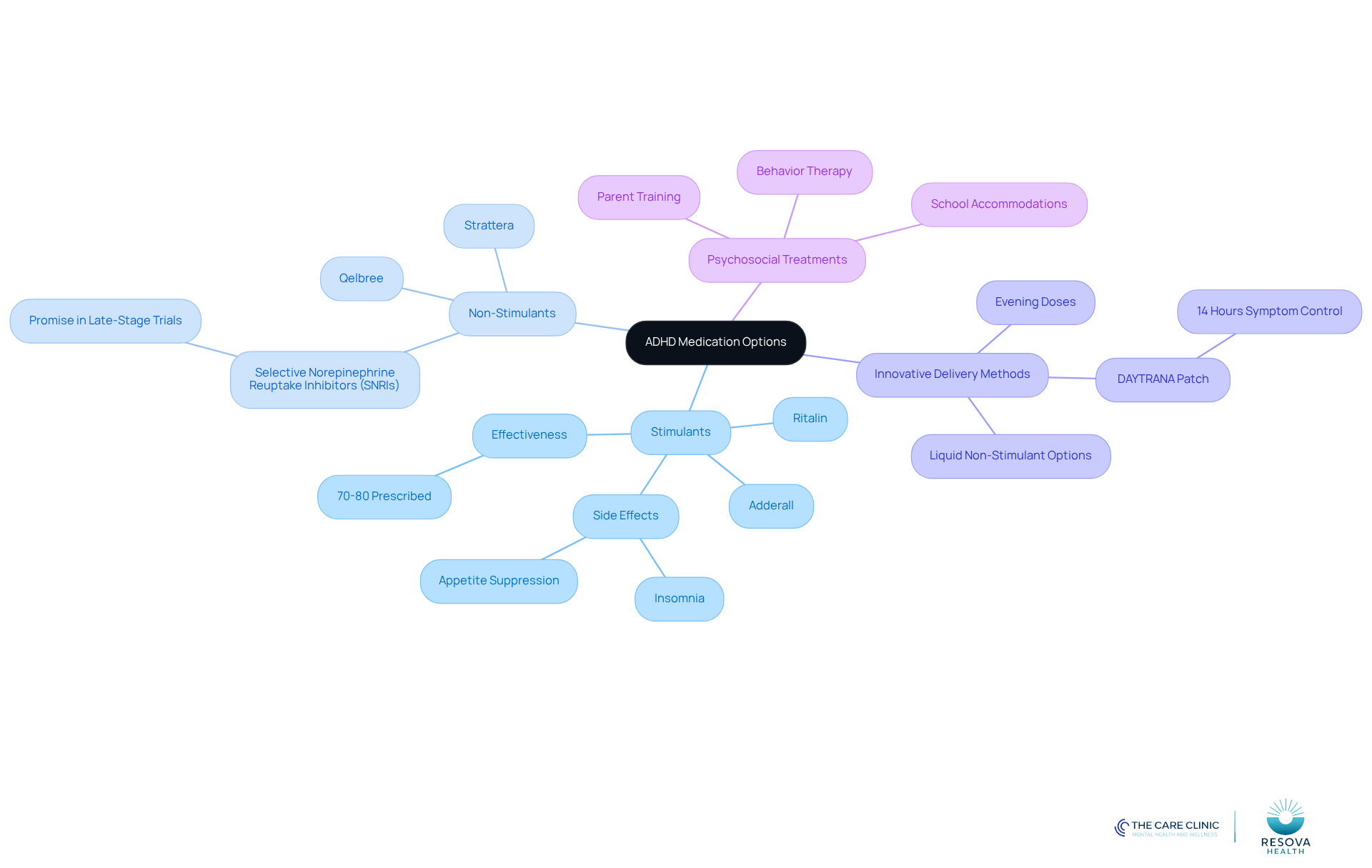
Attention deficit hyperactivity disorder (ADHD) presents a significant challenge in treatment, primarily categorized into two groups: energizers and non-energizers. Stimulants, such as Adderall and Ritalin, are often the first line of treatment due to their proven effectiveness in managing symptoms like hyperactivity, inattention, and impulsivity. Approximately 70-80% of individuals diagnosed with ADHD are prescribed these activating drugs, underscoring their status as the gold standard in treatment. However, non-stimulant alternatives, including Strattera and Qelbree, are gaining recognition for their value, particularly for those who experience adverse effects from stimulants or have specific health concerns.
Recent advancements in ADHD treatment have illuminated the potential of non-stimulant medications, especially selective norepinephrine reuptake inhibitors (SNRIs), which are currently showing promise in late-stage clinical trials. These options are crucial for the roughly 30% of patients who discontinue medication within the first year due to side effects. While stimulants may lead to issues like insomnia and appetite suppression, non-stimulants can provide a more tolerable alternative for some individuals.
Moreover, innovative delivery methods for ADHD treatments, such as evening doses and liquid non-stimulant options, offer families greater flexibility in managing care. For instance, patients using the DAYTRANA patch, a stimulant delivery system, report symptom control for an average of 14 hours per day, compared to 8-10 hours with traditional oral medications. This highlights the importance of personalized care plans and innovative delivery methods in enhancing treatment effectiveness.
As the landscape of ADHD management evolves, ongoing research is exploring new avenues, including targeting the glutamate system to address attention deficits and emotional regulation. Additionally, psychosocial approaches, such as behavioral therapy and educational adjustments, play a vital role in providing ongoing support for individuals with ADHD. Consulting healthcare professionals and reliable sources is essential for those navigating these treatment options, ensuring informed decisions regarding ADHD management.
Find a Qualified Prescriber for ADHD Medication
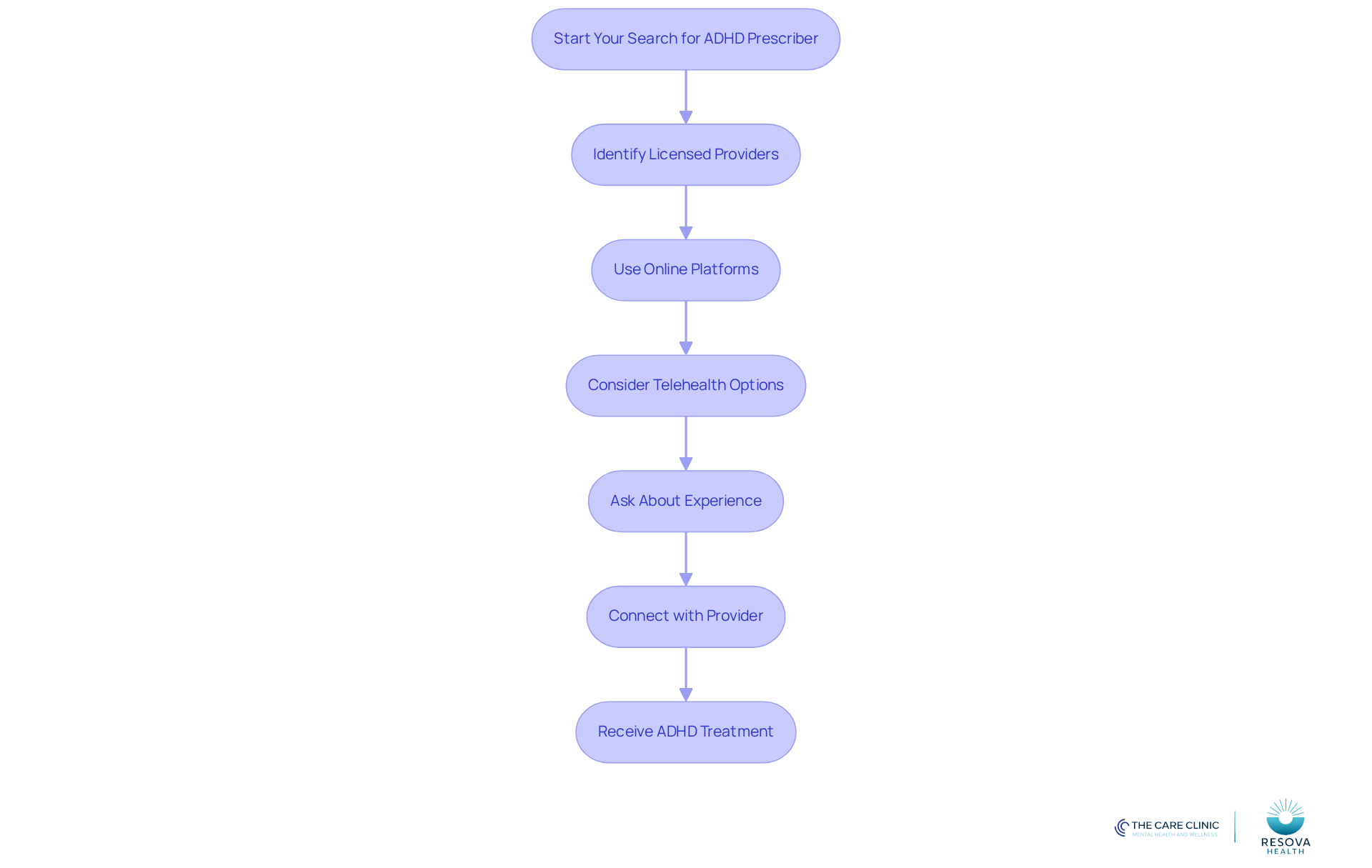
To address this issue, consider starting your search at Resova Health. We specialize in customized programs designed to improve focus and support recovery. Look for licensed psychiatrists or primary care doctors with experience in ADHD management. Online platforms like Psychology Today and local health directories can help you identify professionals in your area.
With the rise of telehealth services, many specialists at Resova Health now offer remote consultations, making it easier to access care from the comfort of your home. Dr. Vinod Rao emphasizes that telehealth enhances healthcare accessibility, which is crucial given the anticipated shortage of ADHD treatments affecting millions of Americans.
When reaching out to potential prescribers, ask about their experience with ADHD management and how to get ADHD meds without insurance. At Resova Health, we provide necessary support on how to get ADHD meds without insurance while ensuring that our medication management is personalized and compliant with local laws.
Recent changes are being implemented to improve access to ADHD medications, including upcoming regulations in February 2026 that will allow general practitioners and nurse practitioners to initiate medical care for adults with ADHD. This approach aims to connect you with a provider who can deliver timely and effective care.
Navigate the Evaluation and Prescription Process
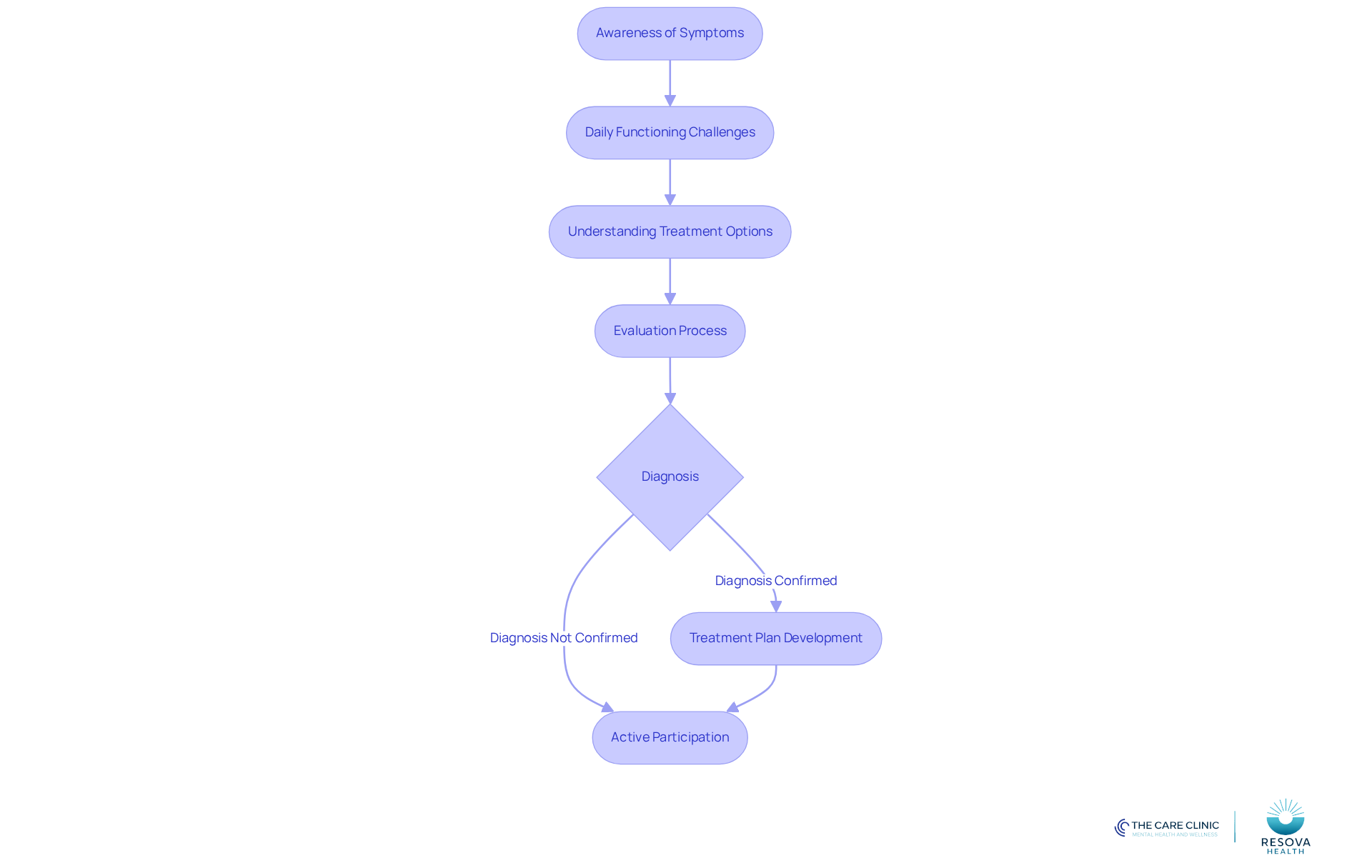
The evaluation process for attention deficit hyperactivity disorder at Resova Health addresses a critical clinical concern: the increasing prevalence of ADHD diagnoses. This assessment is conducted by a prescriber and typically includes questionnaires, interviews, and a thorough review of your medical history. It’s important to prepare for discussions about your symptoms, their impact on your daily life, and any previous care you may have received.
In recent years, particularly in 2025, ADHD diagnosis rates have shown a significant increase, especially among adults. This trend reflects a growing awareness of the disorder’s complexities and the need for effective management strategies. If you receive a diagnosis of ADHD, the prescriber will outline various treatment options and work collaboratively with you to develop a personalized plan, including how to get ADHD meds without insurance. This plan may include innovative delivery methods for treatments, such as evening doses or liquid non-stimulant options, which are becoming more common.
Dr. Edwin Perez emphasizes the importance of understanding that “pharmaceuticals target the physiological dysfunction within the brain that causes impairment in executive functioning.” Active participation during this process is essential; ask questions and express any concerns regarding medications or the proposed treatment strategy. This collaborative approach not only enhances understanding but also empowers you to take an active role in managing your ADHD effectively.
At Resova Health, we accept a variety of insurance plans and maintain a transparent fee structure, averaging between $150-200, along with superbills for potential reimbursement. Our commitment to HIPAA compliance ensures that your data is handled with the utmost confidentiality and security, allowing you to focus on your mental health journey.
Manage Your ADHD Medication and Ongoing Care
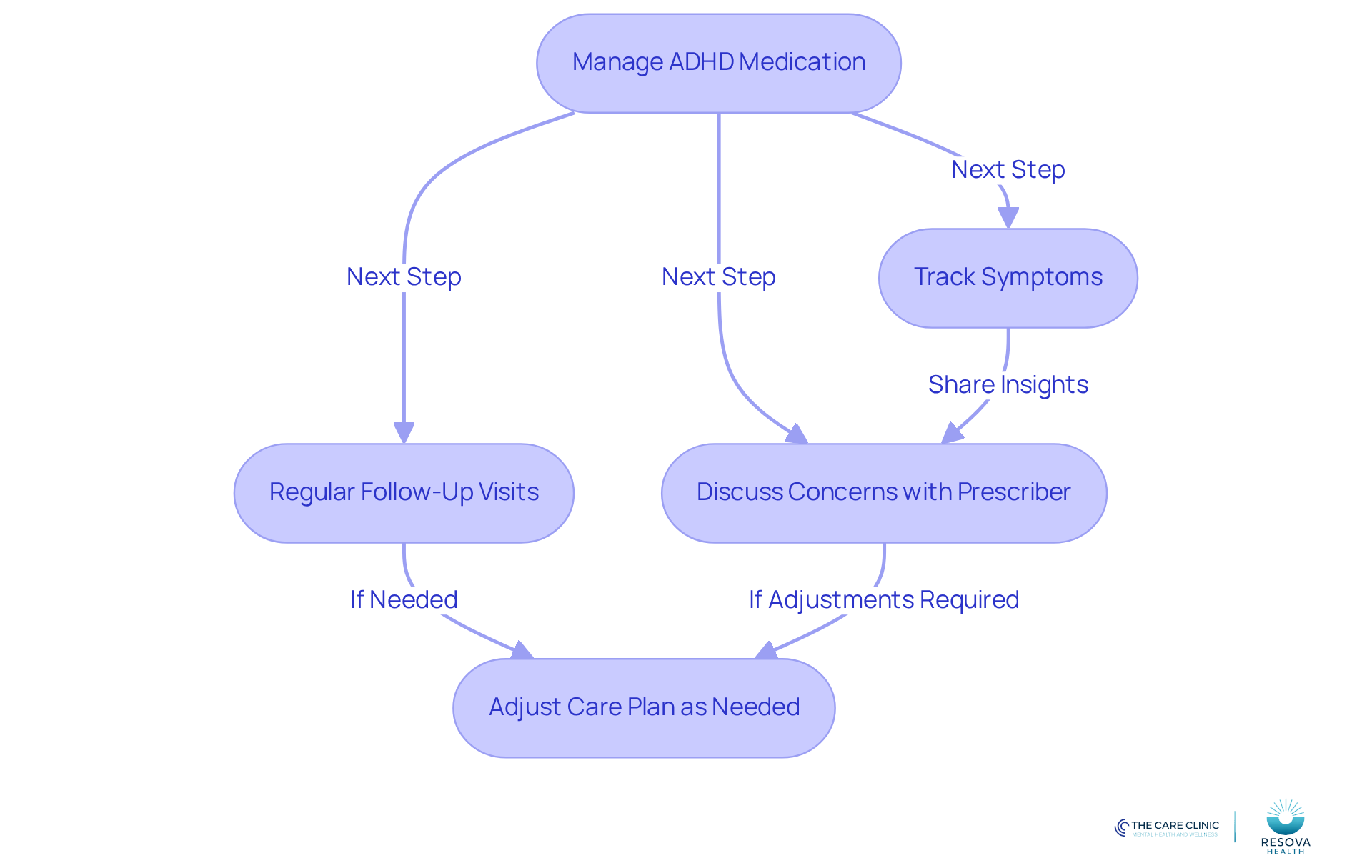
Managing attention deficit hyperactivity disorder (ADHD) effectively hinges on regular follow-up visits with your prescriber. These appointments are crucial for monitoring your response to treatment and identifying any side effects that may arise. By keeping a detailed journal of your symptoms and any noticeable changes, you can provide valuable insights during these visits.
Open communication with your prescriber is essential. Discuss any worries or changes in your symptoms candidly, as effective ADHD management often requires adjustments to your care plan. Research indicates that approximately 6.1% of children diagnosed with ADHD are currently receiving treatment, highlighting the necessity of consistent follow-up care.
The duration of medication effectiveness can vary significantly, making these appointments vital for achieving optimal treatment outcomes. By prioritizing ongoing communication and diligent symptom tracking, you can enhance your ADHD management and overall well-being.
Conclusion
Navigating the complexities of obtaining ADHD medication without insurance presents a significant challenge for many individuals seeking effective treatment. Understanding the various medication options, including both stimulant and non-stimulant alternatives, is crucial for making informed decisions about managing ADHD. By prioritizing personalized care and utilizing available resources, individuals can find the support they need to enhance their treatment experience.
This article outlines four key steps:
- Understanding medication options
- Finding a qualified prescriber
- Navigating the evaluation and prescription process
- Managing ongoing care
Each step emphasizes the importance of collaboration with healthcare professionals and highlights innovative treatment methods tailored to individual needs. With the rise of telehealth and increased access to specialized care, individuals can now pursue ADHD management more effectively than ever.
Ultimately, taking proactive steps in managing ADHD treatment is vital for improving overall well-being. Engaging with healthcare providers, staying informed about medication options, and maintaining open communication can significantly enhance the effectiveness of ADHD management. Embracing these strategies empowers individuals in their journey and fosters a supportive environment for ongoing care and success in managing ADHD.
Frequently Asked Questions
What are the two main categories of ADHD medications?
The two main categories of ADHD medications are stimulants (energizers) and non-stimulants (non-energizers).
What are some examples of stimulant medications for ADHD?
Examples of stimulant medications include Adderall and Ritalin.
How effective are stimulant medications in treating ADHD symptoms?
Stimulant medications are often considered the gold standard in ADHD treatment, with approximately 70-80% of individuals diagnosed with ADHD prescribed these medications due to their proven effectiveness in managing symptoms like hyperactivity, inattention, and impulsivity.
What are some non-stimulant medication options for ADHD?
Non-stimulant medication options include Strattera and Qelbree.
Why might someone choose a non-stimulant medication over a stimulant?
Non-stimulant medications may be chosen for individuals who experience adverse effects from stimulants or have specific health concerns.
What advancements are being made in non-stimulant ADHD medications?
Recent advancements include the development of selective norepinephrine reuptake inhibitors (SNRIs), which are showing promise in late-stage clinical trials.
What challenges do patients face with stimulant medications?
Patients may face side effects such as insomnia and appetite suppression when using stimulant medications.
How do innovative delivery methods for ADHD medications improve treatment?
Innovative delivery methods, such as evening doses and liquid non-stimulant options, offer families greater flexibility in managing care. For example, the DAYTRANA patch provides symptom control for an average of 14 hours per day.
What role do psychosocial approaches play in ADHD management?
Psychosocial approaches, such as behavioral therapy and educational adjustments, provide ongoing support for individuals with ADHD.
Why is it important to consult healthcare professionals regarding ADHD treatment?
Consulting healthcare professionals and reliable sources is essential for making informed decisions about ADHD management and treatment options.
List of Sources
- Understand ADHD Medication Options
- Largest analysis confirms medication and CBT as top ADHD treatment options (https://medicalxpress.com/news/2025-11-largest-analysis-medication-cbt-adhd.html)
- ADHD Update 2025: New Treatments and Current Approaches for Co-Occurring Conditions (https://thecarlatreport.com/articles/5513-adhd-update-2025-new-treatments-and-current-approaches-for-co-occurring-conditions)
- Find a Qualified Prescriber for ADHD Medication
- ADHD Stimulants Can Be Safely Prescribed Via Telehealth Study Argues (https://powershealth.org/about-us/newsroom/health-library/2025/06/16/adhd-stimulants-can-be-safely-prescribed-via-telehealth-study-argues)
- GPs and nurse practitioners able to start ADHD treatment from next year (https://health.govt.nz/news/gps-and-nurse-practitioners-able-to-start-adhd-treatment-from-next-year)
- Telehealth Prescribing of ADHD Medications: Improving Access Without Sacrificing Safety – MGH Psychiatry News (https://mghpsychnews.org/telehealth-adhd-stimulant-prescribing)
- Navigate the Evaluation and Prescription Process
- ADHD in the News 2025-12-11 – CHADD (https://chadd.org/weekly-editions/adhd-in-the-news-2025-12-11)
- ADHD in Adults: A Psychiatrist Explains (https://yalemedicine.org/news/adhd-in-adults)
- Manage Your ADHD Medication and Ongoing Care
- Follow-Up Care for Children Prescribed ADHD Medication (ADD) – NCQA (https://ncqa.org/report-cards/health-plans/state-of-health-care-quality-report/follow-up-care-for-children-prescribed-adhd-medication-add)
- Tips to improve Follow-Up Care for Children Prescribed ADHD Medication (ADD-E) – Provider Newsroom (https://providernewsroom.com/evernorth/tips-to-improve-follow-up-care-for-children-prescribed-adhd-medication-add-e)
- Follow-Up Care for Children Prescribed ADHD Medication (ADD-E) – NCQA (https://ncqa.org/report-cards/health-plans/state-of-health-care-quality-report/follow-up-care-for-children-prescribed-adhd-medication-add-e)